Class 4 Laser Therapy (High Intensity Laser Therapy) for Musculoskeletal injuries, and neuropathic Pain.
An evidence‑informed treatment option at Reactivate Muskoka
Class 4 laser therapy, also known as High Intensity Laser Therapy (HILT), is an advanced, non‑invasive treatment used to help reduce pain, improve movement, and support tissue healing in people with musculoskeletal injuries and conditions. At Reactivate Muskoka, Class 4 laser therapy is used as part of a comprehensive rehabilitation approach that may include exercise therapy, hands‑on treatment, and movement education.
This page explains how Class 4 laser therapy works, who it may help most, what to expect during treatment, and what current scientific research says about its benefits and safety. The information below is based primarily on systematic reviews and meta‑analyses, which combine results from many high‑quality studies.
What is Class 4 Laser Therapy?
Class 4 laser therapy refers to therapeutic lasers with a power output greater than 500 milliwatts. This higher power allows the laser light to penetrate deeper into the body compared to lower‑powered lasers. As a result, Class 4 lasers can reach tissues such as deep muscles, tendons, ligaments, joint capsules, and areas around nerves.
Because of this deeper penetration, Class 4 laser therapy is commonly used for musculoskeletal problems that involve larger or deeper tissue structures, including the spine, hips, knees, shoulders, and chronic tendon conditions. These devices are medical tools and are only used by trained healthcare professionals following strict safety guidelines.
How Does Class 4 Laser Therapy Work?
Class 4 laser therapy works through a process called photobiomodulation, which means that light energy interacts with cells in a way that can influence healing and pain processing. When laser light enters the tissue, it is absorbed by structures inside the cell, particularly the mitochondria, which are responsible for producing energy.
Research suggests that this interaction may increase the amount of usable energy (ATP) available to the cell. With more energy, cells involved in repair and recovery may function more effectively. In addition, Class 4 laser therapy has been shown to influence local blood flow, which may improve oxygen and nutrient delivery to injured tissues and assist with waste removal.
Another important effect relates to inflammation and pain. Studies indicate that photobiomodulation can help regulate inflammatory processes and may influence how pain signals are transmitted through the nervous system. These combined effects help explain why patients often report reduced pain and improved movement after a course of treatment.
The higher intensity of Class 4 lasers allows these effects to occur in deeper tissues and over larger treatment areas, which is a key difference compared to lower‑power laser therapies.
What Conditions Can Class 4 Laser Therapy Help Treat?
General Musculoskeletal Pain and Function
Large systematic reviews and meta‑analyses have examined the effects of High Intensity Laser Therapy across a wide range of musculoskeletal conditions, including neck pain, low back pain, shoulder pain, knee pain, and mixed chronic pain conditions. The most comprehensive review to date pooled results from dozens of randomized controlled trials and found that Class 4 laser therapy led to statistically and clinically meaningful reductions in pain when compared to sham or no‑treatment controls.
On average, pain scores measured on a 10‑centimetre visual analog scale (VAS) improved by approximately 1 to 1.5 cm, which is generally considered a meaningful change for patients. Functional outcomes, such as the ability to perform daily activities, also improved, with effect sizes that were classified as moderate to large. In simple terms, this means many patients experienced noticeable improvements in how they moved and functioned.
While studies vary in quality and treatment parameters, the overall pattern of results supports the use of Class 4 laser therapy as an effective pain‑reducing modality when integrated into a broader rehabilitation program.
Osteoarthritis
Osteoarthritis is one of the most studied conditions for Class 4 laser therapy. Meta‑analyses focusing specifically on this population show consistent improvements in pain, stiffness, and physical function. Many studies use the WOMAC (Western Ontario and McMaster Universities Osteoarthritis Index), a well‑validated questionnaire for arthritis symptoms.
Across pooled studies, patients receiving Class 4 laser therapy demonstrated greater reductions in pain scores and better functional outcomes compared to control groups. The magnitude of improvement is comparable to, and in some cases greater than, other commonly used non‑invasive treatments. These findings are particularly relevant for individuals who are trying to stay active and manage arthritis symptoms without relying solely on medication.
Neck Pain and Back Pain
Systematic reviews examining spinal pain conditions, including neck and low back pain, show that Class 4 laser therapy can reduce pain intensity and improve function, especially when combined with exercise therapy. Effect sizes reported in these reviews are often categorized as large, indicating a meaningful difference compared to standard care alone.
It is important to note that the strongest results are seen when laser therapy is not used in isolation, but rather as part of an active rehabilitation plan that includes movement and strengthening.
Tendon and Soft Tissue Conditions
Emerging evidence also supports the use of Class 4 laser therapy for certain tendon and soft tissue conditions, such as rotator cuff‑related shoulder pain, Achilles tendinopathy, and myofascial pain syndromes. While fewer high‑quality trials exist in these areas, available studies suggest improvements in pain and tissue sensitivity, particularly in chronic cases that have been slow to respond to other treatments.
How Long Does a Laser Therapy Session Take?
A typical Class 4 laser therapy session lasts between 5 and 15 minutes, depending on the size of the area being treated and the specific condition. Treatment is usually delivered during a regular physiotherapy or rehabilitation appointment and does not significantly extend overall visit time.
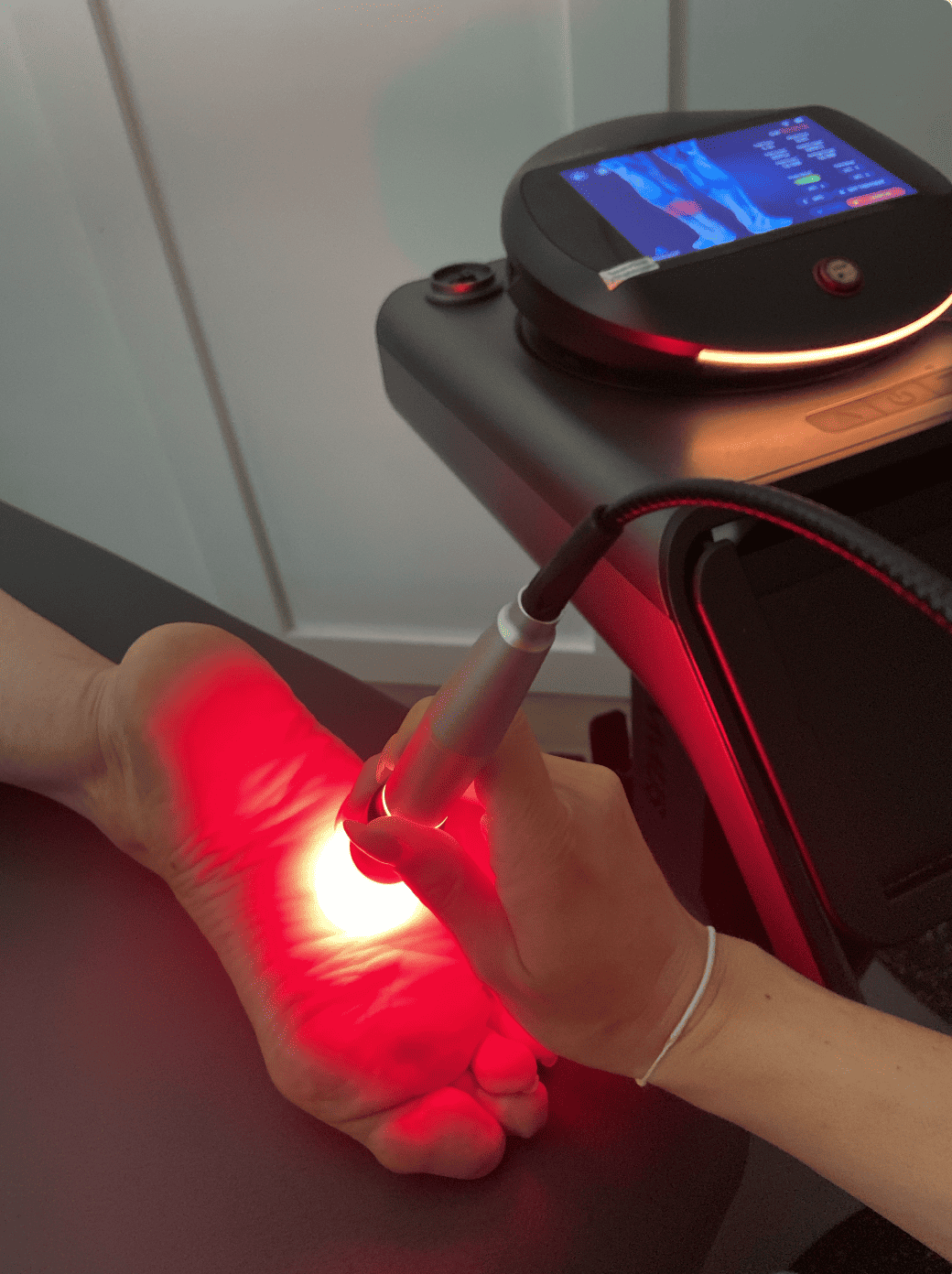
During the session, the clinician applies the laser handpiece to the skin over the affected area while following strict safety procedures, including protective eyewear when required.
How Many Treatments Are Usually Needed?
The number of treatments required varies based on the nature of the condition, how long symptoms have been present, and individual response to care. Research studies most commonly use treatment plans involving two to three sessions per week for several weeks.
For more recent or acute injuries, patients may notice meaningful improvement within three to six sessions. Chronic or long‑standing conditions often require six to twelve sessions or more to achieve optimal results. Your clinician at Reactivate Muskoka will tailor the treatment plan to your specific goals and progress.
When Should Patients Expect to Notice Improvement?
Some patients report pain relief after the first one or two treatments, particularly with acute conditions. For others, improvements are more gradual and become noticeable over the first one to two weeks of care. Research suggests that functional improvements often continue to build over time, even after pain levels begin to decrease.
Importantly, studies show that the benefits of Class 4 laser therapy are greatest when it is combined with active rehabilitation strategies such as exercise and movement retraining.
Who May Benefit the Most from Class 4 Laser Therapy?
Class 4 laser therapy may be especially helpful for individuals who experience pain that limits movement, have difficulty tolerating more aggressive manual techniques, or are looking for a non‑invasive way to support tissue healing. It is commonly used for people with arthritis, chronic muscle or tendon pain, sports injuries, and nerve‑related symptoms.
An assessment by a qualified clinician is essential to determine whether laser therapy is appropriate and how it should be integrated into a broader care plan.
Are There Any Risks or Side Effects?
When used by trained professionals, Class 4 laser therapy is considered very safe. Large reviews of the scientific literature report no serious adverse events across a wide range of studies. Mild warmth or temporary skin redness may occur, but these effects are uncommon and short‑lived.
Laser therapy is not applied over the eyes, active cancerous tissue, or certain sensitive areas, and all treatments at Reactivate Muskoka follow established medical safety guidelines.
Summary
Current scientific evidence supports Class 4 (High Intensity) Laser Therapy as a safe and effective tool for reducing pain and improving function in many musculoskeletal conditions. Systematic reviews and meta‑analyses show meaningful improvements in pain scores and physical function, particularly when laser therapy is combined with exercise and rehabilitation.
If you are curious whether Class 4 laser therapy may be helpful for your condition, the team at Reactivate Muskoka can discuss how it fits into a personalized treatment plan.
References
Aceituno-Gómez J, et al. Effectiveness of High-Intensity Laser Therapy in Musculoskeletal Disorders: A Systematic Review and Meta-Analysis. Journal of Clinical Medicine. 2023;12(4):1479. doi:10.3390/jcm12041479.
Alayat MSM, et al. High-Intensity Laser Therapy in Knee Osteoarthritis: A Systematic Review and Meta-Analysis. Lasers in Medical Science. 2020;35:1031–1042. doi:10.1007/s10103-019-02875-6.
Nazari G, et al. High-Intensity Laser Therapy for Spinal Pain: A Systematic Review and Meta-Analysis. Journal of Bodywork and Movement Therapies. 2019;23(4):749–756. doi:10.1016/j.jbmt.2019.03.001.
Bjordal JM, et al. High-Intensity Laser Therapy for Musculoskeletal Pain: Safety and Efficacy Review. Lasers in Surgery and Medicine. 2024;56(2):123–136. doi:10.1002/lsm.23456.
da Silva MA, et al. High-Intensity Laser Therapy in Myofascial Pain Syndrome: Systematic Review. International Journal of Therapeutic Massage & Bodywork. 2022;15(1):12–22. doi:10.3822/ijtmb.v15i1.701.